Art Movements
Showing posts with label Art Movements. Show all posts

AP Art History: Global Pre-History Overview

Saturday, October 1, 2022

 Welcome to the first of many time period roundups for AP Art History!

GLOBAL PREHISTORY: 30,000-500 BCE

    The 11 works within this content area are split between Paleolithic (old stone age) and Neolithic (new stone age). Below are works from a large section of the world, ranging from cave paintings, the infamous Stonehenge, and multiple interesting sculptures. 


The Apollo 11 Stones

Date: 25,500-25,300 BCE 
Medium: Charcoal on stone
Period: Prehistoric

    This artifact was found by German archeologists in 1969 in Nambia. The archeologists were listening to the radio footage of the Apollo 11 mission when excavating. These two fragments of stones were found 3 years apart, then joined after the second was located. The figure is added to the stone with charcoal. 


The Great Hall of the Bulls

Date: 15,000-13,000 BCE 
Medium: Rock painting
Period: Prehistoric

    Located in the intricate caves of Lascaux, these intricate paintings depict not only bulls but also numerous animals layered over each other. This layering indicates that this area was used over time and multiple generations. The height and overall scale of these paintings would have been extremely difficult to paint, needing some kind of scaffolding. These animals are all shown in 'twisted perspective', meaning that their bodies are shown in profile but the horns are shown frontally. 

Camelid Sacrum

Date: 14,000-7,000 BCE
Medium: Bone
Period: Prehistoric

    Created from the sacrum or tailbone of an alpaca related animal, this object is very perplexing. Found in the Valley of Mexico, it is deliberately sculpted and smoothed. Like with all objects created before writing, it is impossible to truly know the reason and significance with which this was sculpted. Many believe it later related to Mayan Canine gods/goddesses. 


Running Horned Woman

Date: 6000-4000 BCE
Medium: Pigment on Rock
Period: Neolithic

    First, it is important to note that the above image is the restored version of this painting. I encourage you to do some research on what the non-reconstructed version is. 
    Found in the Tassili region of Algeria, situated in the Sahara Desert, this rock painting is very interesting. Once again, twisted perspective is used in not only the figure in the foreground but also all of the other characters in the background. The central figure is a very intricate and confusing image, with a horned headdress, traditional dress, and maybe some traditional tattooing. Many believe that she may be a goddess, due to the possible rain cloud near her headdress. 


Beaker with Ibex Motifs

Date: 4200-3500 BCE
Medium: Painted Terra Cotta
Period: Neolithic

    This piece of pottery's most distinctive characteristics are the three registers, all filled with highly stylized animals. The most noticeable register includes an ibex or mountain goat with very decorative horns. All three registers shift these animals into geometric shapes, making this object not only interesting from an archeological perspective but also from an artistic one. The other two registers include a breed of dog and a bird. 


Anthropomorphic Stele

Date: 4th millennium BCE
Medium: Sandstone
Period: Neolithic

    This near-human, low relief sculpture is thought to have perhaps been a funerary marker. The double dagger on the waistband was very characteristic of this period. Over sixty-five of these steles were found. A stele is a singular, large piece of stone or wood, engraved in relief with an image or text of some kind. 


Jade Cong

Date: 3300-2200 BCE
Medium: Jade
Period: Neolithic

    Created in Neolithic China, there were hundreds of these congs found in graves along with bi (disks made from jade). Their purpose is unknown, but archeologists know that they must have been a fairly long standing custom due to their multitude. Jade is a notoriously hard material and during Song China, machines to cut this material had not been created. This means that all sculping was done by abrasion. 


The Ambum Stone

Date: 1500 BCE
Medium: Greywacke
Period: Neolithic

    While being used by Natives of Papua as a ritual object, New Guinea, this sculpture was taken from its place of origin. Its original purpose is again unknown, but many think that perhaps it was used as a mortar and pestle by holding the nose and grinding with the bottom.  


Tlatilco Female Figurine

Date: 1200-900 BCE
Medium: Ceramic
Period: Neolithic

    Found in large quantities in a burial setting, this figure is one of many but has a very interesting defining factor: the two faces. The Tlatilco village was a pre-Columbian culture who settled in the Valley of Mexico. It was the setting of the Aztec Empire 2000 years later. The coloring of this sculpture, hair details, hands, and feet set it apart from its counterparts. As a collective, these figures pose the same question as many pieces of Prehistory art: What were the religious beliefs of this culture? Many scholars point to this sculpture as an emphasis in duality, light and dark, and good and evil. 


Terra Cotta Fragment 

Date: 1000 BCE
Medium: Terra cotta
Period: Neolithic 

    This fragment comes from the Lapita culture in the Philippines. Pacific island culture such as this Filipino one are famous for their symmetric, stylized tattoos. This piece of terra cotta is believed to have been part of a very large design. It includes an anthropomorphic face, geometry, and cross hatching. 


Stonehenge

Date: 2500-1600 BCE
Medium: Sandstone
Period: Neolithic


Romanesque Architecture

Thursday, March 24, 2022

    The state of Europe during the Romanesque period was ideal for the creation of new art and architecture. Reinstated trade, improved economy, higher populations, the constant growth of Christianity, and agricultural surplus were all contributing factors to the period. The Romanesque pulled from many ancient traditions such as the Byzantine, Roman, Ottonian, and Islamic symbolism. The term "Romanesque" was originally used due to the architectural forms being reminiscent of ancient Rome's but is now used by art historians to refer to the whole movement (Bleiberg 437). Shortly before the Romanesque began, Europe’s society was fixed in a feudal system. Within European feudalism, landlords hold power and land over their vassals, their servants who would repay them with military security. Due to the food surplus and economic boost, Europe slipped from the feudalist grip (Garnder and Kleiner 341). As Europe changed in the High Middle Ages, the Romanesque developed and shifted the perception of religious architecture. Romanesque architecture is both reflective of Europe’s state of prosperity in agriculture, economy, society, and religion at the time and reminiscent of ancient cultures such as Rome. The Romanesque set a standard for not only religious art of its age, but many of the changes made during this period still remain.

Christian monuments’ layouts were revolutionized during the Romanesque period throughout Europe including France, Spain, the Holy Roman Empire, Italy, Normandy, and England. The Romanesque changed the Christian church structure through the movement from timber to stone vaultings, multistory basilicas, and rounded arches. Most basilicas before the Romanesque were unremarkable, but due to a rise in Christian pilgrimages and economic stability the Romanesque brought awe to the religious monument. The standard, single level and short naved basilica originally designed by the Romans was revolutionized by the Carolingians, by adding a second apse and transepts. The addition of transepts allowed for separate worship chapels dedicated to saints. During the Romanesque, radiating chapels became an essential feature of basilicas due to personal aspects of worship. Many pilgrims would come to worship a singular saint by themselves, thus smaller chapels set off from the regular altar or apse were needed. As time continued and design took turns, many basilicas became multi-level, creating a nave on the top and bottom levels, and with the addition of leaves came stair towers, adding complexity to the facades of these buildings (Johnson). For example, while many basilicas before the Romanesque were one story with timber vaulting, Romanesque churches raised the layout to two or more stories, opening the space up to the large, billowing churches known today. The addition of stories also created an impetus for extra support, thus the Romanesque also employed the barrel and groin vaults. A barrel vault is simply a half-tube ceiling, but groin vaults are the intersection of barrel vaults, creating a ribbed look. In addition to vaulting techniques, the added elevation created a space for engaged or attached pillars, half columns integrated into the wall of the tall aisles (Kluckert 20-31). 


Saint-Sernin Basilica (above) is an early Romanesque church with subtle examples of the changes made in this movement. The ceiling is barrel vaulted with a high, but completely rounded arch. Very small, attached pilasters are visible along the nave. Saint-Sernin’s vaultings are fully made of stone, thus fully avoidant of the frequent church fires at the time (Garnder and Kleiner 344-345). 


The floor plan of Saint-Sernin (above) shows the changes made during the Romanesque. They include the nine radiating chapels, elongated nave, the transept perpendicular to the nave, and an enlarged apse for worship. This church can accommodate the large number of pilgrims and their worship. The changing of the floor plan completely shifted the Christian experience within churches. 

Not only did the spatial elements of churches change, but sculptural elements such as decorative sculpture and entryway art evolved to shift the way church-goers experienced their religion. Relief sculpture above and surrounding the door depicted images of Jesus Christ, the crucifixion, or the Last Supper. There are many sculptural elements to a Romanesque entryway. 


    The Church of St. Pierre (above) has a relief sculpture with a Christian image. As was the standard during the Romanesque, this relief was not ‘high relief’, meaning it did not come very far out of the wall. These sculptures were detailed but had a low grade of depth variation. The rounded arch filled with relief is called a tympanum, this space holds the aforementioned low relief. The tympanum is framed by very small arches, called archivolts, themselves filled with small, decorative relief. Lastly the lintel, a horizontal beam beginning the tympanum, sets the place for the relief to begin (Garnder and Kleiner 350). The characteristic low relief quality of the Romanesque carried into other decorations as well, including the attached columns and pilasters seen above in the archway and the interior of Saint-Sernin. None of these sculptures are completely independent of their stone or wall. As time progresses and the Romanesque evolves into the Gothic, these sculptures become more and more pronounced. 

    Another example of tympanum relief is the Church of St. Foy (above). This relief depicts the Last Judgment, a well known scene in the Bible and a popular choice for sculptures on churches (Johnson). While this sculpture is very detailed, it is very dependent on the wall of the tympanum. Within the Romanesque, low relief sculpture was used to convey religious images in the entryway. 

The changes made during the Romanesque helped progress architecture in many ways, but its legacy still lives on through Romanesque revival architecture or Richardsonian Romanesque. H. H. Richardson was the main architect associated with Romanesque Revival, so much so that the style was named for him. Richardson’s work is reminiscent of the Romanesque, using heavy stone, rounded arches, and low relief tympanums. He also combined these elements with architectural standards of the time, creating a fusion of architectural elements (O’Gordon). 

    For example, H. H. Richardson’s Trinity Church (above) in Boston is a Richardsonian Romanesque building. Its two toned heavy stone, attached columns, rounded arches, and low relief sculpture on the exterior all pull from the Romanesque. This was Richardson’s true debut of his style, pulling from old Romanesque works of Byzantine churches and European basilicas. The Romanesque style was not limited to one time period. 

The drastic changes made to Christian churches during the Romanesque period of architecture not only had a profound impact during their time, but also have survived into American architecture. Additions made during this period changed the religious experience of European Christians, making more space for pilgrims, more secluded areas, and more references to ancient Roman architecture. The sculptural elements of these churches and basilicas reference the most popular and recognizable scenes from the Bible. The lasting impact of the Romanesque materialized through the work of H. H. Richardson in 19th century architecture, referencing the Byzantine and Romanesque Christian architecture. Due to Europe’s prosperous state and Christianity's growing, the Romanesque was able to flourish and spread its influence beyond borders of time and land. 

Works Cited
"Art and Architecture." Trinity Church Boston, Trinity Church in the City of Boston, www.trinitychurchboston.org/art-and-architecture. Accessed 23 Mar. 2022.
Gardner, Helen, and Fred S. Kleiner. Gardner's Art through the Ages: A Global History. Fifteenth edition, Student edition. ed., Cengage Learning, 2016.
Johnston, Ruth A. "Romanesque Cathedrals." World History: Ancient and Medieval Eras, ABC-CLIO, 2022, ancienthistory.abc-clio.com/Search/Display/1692856.
Kluckert, Ehrenfried. "Romanesque Building Styles." Romanesque: Architecture, Sculpture, Painting, by Rolf Toman et al., Special edition. ed., Potsdam, H.F. Ullmann, 2010, pp. 20-31.
O'Gordon, James Frances. "H.H. Richardson." Encyclopaedia Britannica, 25 Sept. 2021, www.britannica.com/biography/H-H-Richardson. Accessed 22 Mar. 2022.
Renalias, Josep. South Portal, Saint-Pierre, Moissac, C. 1115-30. 27 Jan. 2008. Khan Academy, www.khanacademy.org/humanities/medieval-world/romanesque-art/romanesque-art-in-france/a/saint-pierre-moissac. Accessed 7 Mar. 2022.
"Romanesque Art: An International Phenomenon." Arts and Humanities through the Eras, edited by Edward I. Bleiberg et al., vol. 3, Gale, 2005, pp. 437-41. Gale eBooks, link.gale.com/apps/doc/CX3427400610/GVRL?u=tel_k_harpeth&sid=bookmark-GVRL&xid=37b6392a. Accessed 3 Mar. 2022.
Selim, Pierre. Basilique Saint-Sernin. 2 May 2012. Khan Academy, 2022, khanacademy.org/humanities/medieval-world/romanesque-art/romanesque-art-in-france/a/basilica-of-saint-sernin. Accessed 21 Mar. 2022.
Teishenèir, Òme Deu. Last Judgment Tympanum, Church of Sainte‐Foy, France. 5 Aug. 2010. Khan Academy, 2022, www.khanacademy.org/humanities/ap-art-history/early-europe-and-colonial-americas/medieval-europe-islamic-world/a/church-and-reliquary-of-saintefoy-france. Accessed 22 Mar. 2022.
Velvet. Conques Eglise Nef. 4 June 2015. Khan Academy, www.khanacademy.org/humanities/ap-art-history/early-europe-and-colonial-americas/medieval-europe-islamic-world/a/church-and-reliquary-of-saintefoy-france. Accessed 10 Mar. 2022.

Art Movement: Hellenistic Sculpture

Tuesday, August 3, 2021

 
    Beginning shortly after the death of Alexander the Great in 323 BCE, the Hellenistic period lasted almost 300 years, ending with the suicide of Cleopatra and Mark Antony. After Alexander's death, the empire was split up by his many successors, and these leaders became very wealthy. Thus, the Hellenistic Period was born along with many of the most famous art we know today. 


    Venus de Milo is a very famous example of Hellenistic sculpture. Hellenistic sculptors took on many new subject matter, but also made changes to the existing ones such as Greek gods and goddesses, as seen above.  Venus is depicted as much more human than the more religious and earlier representations. Although she is more human, Venus is represented as an ideal version, and her stance being most notable. Her body is contorted to not only express her outer, but also her inner beauty, as was only a goal in Hellenistic sculpture.


    In traditional sculpture, the Greek athlete would be a typical subject matter, but the Hellenistic take on The Boxer of Quirinal or The Seated Boxer is depicted differently Instead of the triumphant young man, the Hellenistic boxer is beaten up and defeated, possibly looking up at his opponent. The figure's hands are rapped in leather, and his forehead bleeds from a few cuts. Contrasting with many classical examples of Greek athletes, The Boxer of Quirinal evokes empathy from the viewer. 


    The Winged Victory of Samothrace is yet another example of Hellenistic sculpture. Click here for a separate post on this work.


    Hellenistic sculptors strove to evoke emotion and push the classical boundaries through their art. 


Sources: 
Gardner, Helen, and Fred S. Kleiner. Gardner's Art through the Ages: A Global History. Fifteenth edition, Student edition. ed., Boston, Cengage Learning, 2016.
"Hellenistic Sculpture." Greek Landscapes, GreekLandscapes.com, greeklandscapes.com/hellenistic-sculpture/. Accessed 3 Aug. 2021.
Hemingway, Colette. "Art of the Hellenistic Age and the Hellenistic Tradition." Edited by Seán Hemingway. The Metropolitan Museum of Art, Metropolitan Museum of Art, Apr. 2007, www.metmuseum.org/toah/hd/haht/hd_haht.htm. Accessed 3 Aug. 2021.
 

Art Movements: Abstract Expressionism

Wednesday, May 26, 2021


    Known as the first influential art movement worldwide to come out of America, the Abstract Expressionist Movement was born in the 1940's. The movement was lead by artists such as Mark Rothko, Jackson Pollock, Joan Mitchell, Willem de Kooning, and so many more. 


    The Abstract Expressionist movement did not start out smoothly due to the group of artists' varying opinions of what the movement should become. For example, many of the artists did not like the idea of being associated with a larger group, because of their varying ideas. Despite their worries and resistance of being confined to in -ism, history has proved itself, and the art world now knows this group as the Abstract Expressionists. The beginning of the movement was largely influenced by the stock market crash of 1929. This event itself did not start the movement but rather its effects such as the Great Depression, WWI, and WWII. These major events in America created an impetus for change in the art world with so many emotions to express and document. 

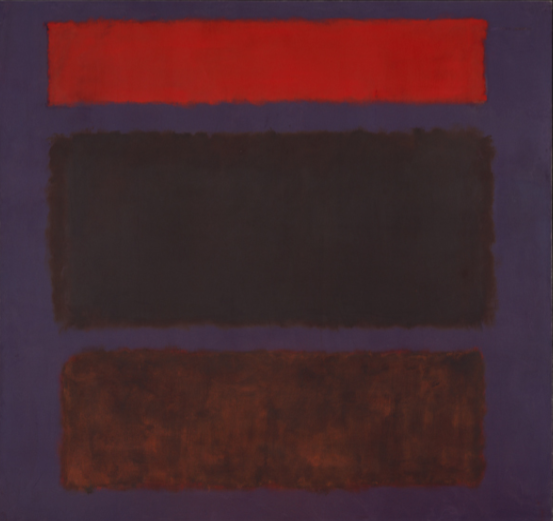
      Mark Rothko (click on the post already done about him) started out his career away from Abstract Expressionism, taking lots of inspiration from Surrealism (click to learn more), but as he got older and more experienced his style grew more and more contemporary. His family immigrated from Russia in 1913, and he began Yale in 1914. Although he dropped out of college, he began traveling around the USA for inspiration. Rothko's art (as seen above) is instantly recognizable to many viewers, due to his large blocks of color. This artist was of the belief that, “I’m interested only in expressing basic human emotions-- tragedy, ecstasy, doom. If you … are moved only by … color relationships, then you miss the point.”  


    Joan Mitchell (click to view the post already done) was one of the only women accepted into the Abstract Expressionist movement. Mitchell used art as a tool of self-expression, as many other Abstract Expressionist did, but rather in a different way. Mitchell used her art as an outlet during difficult times such as her mother's death. She was particularly interested in conveying nature scenes. She said she does not paint a nature scene exactly, but “what it leaves me with.” 


    Willem de Kooning was an artist that was highly influenced by many different styles and artists, including Cubism, saying," Of all movements, I like Cubism the most." He also was a big leader in the Abstract Expressionist movement. 

    The Abstract Expressionists believed in expressing emotion through non-figurative art. 


Hess, Barbara, et al. Abstract Expressionism. Revised [edition]. ed., Köln, Taschen, 2016. 
Kleiner, Fred S., and Helen Gardner. Gardner's Art through the Ages: A Global History. Fifteenth edition ed., Boston, Cengage Learning, 2016.
"Mark Rothko." Britannica School, Encyclopædia Britannica, 2 Sep. 2010. school.eb.com/levels/high/article/Mark-Rothko/64191. Accessed 23 Jun. 2020.
MoMa Highlights: 350 Works from the Museum of Modern Art, New York. 3rd ed., New York, Museum of Modern Art, 2013.
No. 6 - Violet, Green and Red. Fine Art. Britannica ImageQuest, Encyclopædia Britannica, 25 May 2016.quest.eb.com/search/107_3355794/1/107_3355794/cite. Accessed 23 Jun 2020.
"Orange and Yellow." Image. Britannica School, Encyclopædia Britannica, 8 Feb. 2020. school.eb.com/levels/high/assembly/view/156960. Accessed 23 Jun. 2020.
Twemlow, Maleficent. "A Painting as an Experience." MOMA, 18 Mar. 2013, www.metmuseum.org/blogs/teen-blog/modern-and-contemporary/posts/rothko. Accessed 23 June 2020.


Do you like this movement? Comment below!!


Art Movements: The Rococo

Wednesday, May 5, 2021

    In the wake of the death of King Louis the XIV, early 18th century France rejected the Baroque's harsh edge and dramatic subject matter, and a new movement rose from the aristocrats of France. Pastel, nature scenes come to popularity along with the replacement of the monarchy the everyday, upper class. French aristocrats take the stage along with soft nature and virtuous backgrounds. 


    Jean-Antoine Watteau, known as the father of the Rococo, was heavily influenced by artists such as Peter Paul Rubens, Titian, and Paolo Veronese. Watteau painted mostly idyllic nature scenes full of pastels, florals, and whimsical setting. Attending the Royal Academy of Painting and Sculpture, Watteau went on to influence many of the artists acclaimed as Rococo masters today. Above is Watteau's painting, Pleasures of Love. While the style is Rococo, the audience can still see the influence of the Baroque as the lighting is still dramatic and the nature background fades into darkness. As the Rococo progresses, these characteristics will fade into more luminous qualities. 


    Taking lots of inspiration from earlier Rococo artist Watteau, Francois Boucher was also a Rococo artist. Boucher studied mostly Dutch landscape painting and the Italian Baroque (click to see the art movement post) in Rome, one of the artistic hubs of the world at the time. Boucher's application of these past styles is very visible in his work. For example, in The Secret Message, Boucher exemplifies the classic Rococo, play-like, and natural scene. The audience can see the influence of Dutch landscape painting and the Italian Baroque. 


    Much like his contemporary, Jean-Honore Fragonard took inspiration from the Dutch and the Italian Baroque. Fragonard liked to experiment with textures in his art through objects such as florals, clothing, nature, clouds, and others. In this painting, The Love Letter, he plays with texture and value through the curtains and folded cloth. While this painting is not what many think of as the typical Rococo painting with luminous, floral background, Fragonard still found a way to fit in nature through the small bunch of flowers. 


Works Cited

Art History 101. The Meeting (from the Loves of the Shepherds), 1771-1773. Artsy, www.artsy.net/artwork/jean-honore-fragonard-the-meeting-from-the-loves-of-the-shepherds. Accessed 2 May 2021.
Kimball, Fiske. "The Creation of the Rococo." Journal of the Warburg and Courtauld Institutes, vol. 4, no. 3/4, 1941, pp. 119-23. JSTOR, doi:10.2307/750409. Accessed 2 May 2021.
Kleiner, Fred S., and Helen Gardner. Gardner's Art through the Ages: A Global History. Fifteenth edition, Student edition ed., Boston, Cengage Learning, 2016.
Lebowitz, Rachel. "10 Artworks That Defined the Rococo Style." Artsy, 28 May 2018, www.artsy.net/article/artsy-editorial-10-artworks-defined-rococo-style. Accessed 2 May 2021.

Art Movements: Surrealism

Saturday, March 20, 2021

     Still in the dawn of the 20th century, artist were hungry for new thought and once again broke from classism. 


    Not only was Surrealism an art movement, but also a political and literary movement. The movement truly began as a literary movement with writers unleashing their deepest imagination and subconscious thoughts. The published Manifesto of Surrealism became a point of unity for the movement in 1924. The Surrealism Movement spread very quickly and to all over the globe. 


    Max Ernst (click on the name for a Zooming In) was a visual art Surrealist along with Giorgio de Chirico (click on the name for a Zooming In), Joan Miro, René Magritte, André Masson, and Man Ray. These artist shocked the world with nonsensical images of the subconscious. 

As described in "First Manifesto of Surrealism", the correct definition of surrealism is as follows: "Pure psychic automatism by means of which one intends to express, either verbally, or in writing, or in any other manner, the actual functioning of thought. Dictated by thought, in the absence of any control exercised by reason, free of any aesthetic or moral concern."


    Max Ernst was one of the oldest Surrealist artists, as he was previously a Dadaist. Ernst was certainly at the head of the movement. In his art, the audience can notice the care taken to create the figures, landscapes, objects, etc., but they are applied to a sort of hallucination scene. The realism of these objects are enthralling and yet Ernst places them in a dream-like or nightmare-ish manner. For more information of Ernst himself click HERE


    Man Ray was also a trailblazing Surrealist who came from a Dada background. He was the main founder of Dadaism in the United States. He worked mostly in photography. He was enamored with the ability to turn an existing figure into something that did not seem real to an audience.  


    Lastly, Rene Magritte was another Surrealist. He studied at the Academie Royale des Beaus-Arts in Brussels, before being taken by Giorgio de Chirico's work. He adapted an altered de Chirico's work. As seen above, Magritte liked realism, but with a twist. For example, above, the landscape and figures are perfectly realistic and believable, but that small green apple is disrupting what could have been a perfectly fine piece of portraiture. 

    There are so many more artist that greatly contributed to Surrealism.  

Elger, Dietmar, et al. Modern Art: A History from Impressionism to Today. Köln, Taschen, 2018.
Magritte, Rene. "René Magritte." Koones, www.kooness.com/artists/rene-magritte. Accessed 20 Mar. 2021.
Ray, Man. Noir et Blanche. 1926. Artsper Magazine, blog.artsper.com/en/lifestyle/5-things-to-know-about-man-ray/. Accessed 20 Mar. 2021.
Voorhies, James. "Surrealism." In Heilbrunn Timeline of Art History. New York: The Metropolitan Museum of Art, 2000–. http://www.metmuseum.org/toah/hd/surr/hd_surr.htm (October 2004)

What do you think of Surrealism? Are you a fan of any of these artists? Leave a comment!!!

Art Movements: Dutch Golden Age

Wednesday, February 17, 2021

     Cultural pride and economic domination were both major drivers of the Dutch Golden Age. 


   Genre scenes, portraits, and still lifes were very typical of the Dutch Golden Age. This movement spanned from the late part of the 1500s through about 1670. Pieter Bruegel the Elder and Albrecht Durer (click on the names to learn more) were both very important predecessors to the Dutch Golden Age. After the war between the two was over and Spain formally  recognized the Dutch independence, the Dutch Golden Age was born. The Dutch Reformed church also played a large role in the making of the Dutch Golden Age. The Dutch economy was rapidly growing, creating a large and active merchant class. 


    Jacob Ochtervelt was a Dutch Golden Age painter known for everyday scenes and portraiture. He was a classic painter of this movement. The painting above is A Nurse and a Child in an Elegant Foyer, and was painted in 1663. During the Dutch Golden Age works of everyday scenes and portraits were commissioned, as people wanted art for themselves for their own houses. Featuring the family and everyday activities, this particular painting is a combination of both a genre scene and a portrait. The warm colors and active subject matter make it a perfect example of this movement. 


    Born in July 15, 1606, Rembrandt Harmenszoon van Rijn is a Dutch Golden Age painter whose reputation has built a name for his awe-inspiring art. Rembrandt is commonly recognized as both a Dutch Golden Age painter and a Northern Baroque artist. Above in the particular painting, the audience can see the dramatic lighting. Rembrandt was known for fusing together these two movements.

    
    Jan Josephszoon van Goyen was another prolific Dutch Golden Age painter. He painted mostly genre scenes and landscapes. These works would have also been in a home and commissioned by someone for this setting. Above in Jan Josephszoon van Goyen's Winter scene on the Ice, the audience can see the seemingly busy people in their hustle-and-bustle of work. Here van Goyen combines these figures' movement with a breathtaking landscape. 


    Johannes Vermeer was a very highly acclaimed Dutch artist. His father worked as an art dealer, giving a younger Vermeer a chance to be around and learn about the masters. Vermeer was a Dutch Golden Age artist along with being part of the Northern Baroque movement. Above is Vermeer's The Milkmaid , a mixture of the two movements. Painted in 1657, this work has the subject matter of a Dutch Golden Age piece, but also has many Baroque elements. Vermeer is commonly know as having elements of both movements in his work, and this work is a perfect example. 


"The Dutch Golden Age." Youtube, uploaded by Sotheby's, 11 July 2014, www.youtube.com/watch?v=us4QFxcbqCY. Accessed 15 Feb. 2021.
"Dutch Golden Age Painting - History and Concepts." The Art Story, m.theartstory.org/movement/dutch-golden-age/history-and-concepts/. Accessed 14 Feb. 2021.
Kleiner, Fred S. Gardner's Art through the Ages: A Global History. 15th ed., Boston, Cengage Learning, 2016.
Liedtke, Walter. "Johannes Vermeer (1632–1675)." In Heilbrunn Timeline of Art History. New York: The Metropolitan Museum of Art, 2000–. http://www.metmuseum.org/toah/hd/verm/hd_verm.htm (October 2003)

Art Movements: Egyptian Temple Sculpture

Saturday, January 23, 2021

    Throughout the Egyptian Empire, art was a very important part of the religious life an Egyptian. Sculpture was the main medium of Egyptian religious art. High relief, low relief, and freestanding sculpture were very popular types of sculpture and were also used together.


    This first and probably most common type of sculpture in Egyptian religious art is low or sunken relief. Low relief sculpture is mostly seen in tombs. They are used to inscribe things with hieroglyphics and  small figures acting out these scenes. Seen above, Pharaoh Akhenaten (center) and his family worshiping the Aten. Sometimes, low relief sculpture was also used alongside other types of sculpture. For example, sometimes a freestanding sculpture had low relief carvings on the side with explanations. 


    The much less popular high relief sculpture was also used in religious life in ancient Egypt. High relief sculpture is more pronounced out from the original backing stone. This high relief sculpture of Cleopatra is one of the best examples of this type of sculpture. Cleopatra comes out of the stone more than that of low relief. 


    Freestanding sculpture was almost always of royal figure, and because Ancient Egyptian royalty were believed to be divine figures than they were also considered religious. The majority of royal statuary were found in temples or tombs. Ancient Egyptians believed that their royalty were divine figures and were also gods. Offerings were made to these sculptures. 


    Much like at the temple Abu Simbel, above, in many depictions of pharaohs and their families in sculptures, the pharaoh is much larger than all the others. Abu Simbel was a temple to Rameses II and Nefertari. This is just one example of this type of depiction. 


DownUnderPharaoh Egyptian art - Cleopatra dressed as the Goddess Isis. Down Under Pharaoh, downunderpharaoh.patternbyetsy.com/listing/882309239/egyptian-art-cleopatra-dressed-as-the. Accessed 22 Jan. 2021.

Strudwick, Helen. The Encyclopedia of Ancient Egypt. New York, Metro Books, 2013


Do you have any questions about this? Comment!! Any suggestions? Comment!!


Art Movements: Propaganda

Monday, December 28, 2020


    While propaganda art goes back a very long time, an influx of propaganda can be traced back to World War 1. With the cultural climate changing everywhere in the world, many beliefs, ideas, and opinions were circulating. Thus propaganda was born. There was still early propaganda. While propaganda has a political use, it is considered art. 

    This piece of propaganda was created in 1919 in the United States. During this time there was an influx of immigration coming into the USA for more opportunities. The above piece in specific protests the large amount of European immigrants coming into the country at the time. Here Uncle Sam, a very popular figure for depicting America, is manning a funnel. He is shown filtering out the masses to only allow an allotted amount into the USA, shown in the bottom right of the image. During the time the USA had put quotas into place for immigration. There was much propaganda made during this time surrounding this purpose.


    This propaganda image was created around 1952 during the large vaccination of Chinese people. During the time many people from China were getting vaccines due to the bacteria that came along with the combat that China was taking part in at the time. Much of China was convinced that Americans were intentionally adding bacteria to their weaponry to infect many Chinese people. In the top part of the image there is a figure shown staring at what I believe is supposed to be an American. This American is on top of a gun that has flies and rats surrounding it, making it stereotypically "dirty". 


  This poster is Chinese propaganda in 1950. At the time there was an American commander in Korea, General MacArthur. He is shown stabbing a Korean Mother and baby. Also to the upper left there is a plane dropping a bomb that is labeled US. These bombs are being dropped on Chinese cities while the USA is invading Korea. 


    This propaganda image depicts the Chairman Mao en route to Anyuan. Mao is shown foraging across the land, noble and kind. This image was meant to uphold the cultural revolution in China at the time, a revolution that was lead by Chairman Mao. In this image Mao brings change and resources like electricity to China. He is depicted as a very young man here. Many pieces of propaganda were created in the likeness of Mao. 


"Art and Propaganda." In obo in Art History. 28 Dec. 2020. <https://www.oxfordbibliographies.com/view/document/obo-9780199920105/obo-9780199920105-0110.xml>.
"Closing the Door on Immigration." National Park Service, www.nps.gov/articles/closing-the-door-on-immigration.htm. Accessed 28 Dec. 2020.
"51 Powerful Propaganda Posters and the People Behind." Smashing Magazine, www.smashingmagazine.com/2010/06/100-years-of-propaganda-the-good-the-bad-and-the-ugly/.

What do you think about propaganda? Which is your favorite story? Comment below!

Art Movements: Medieval and Early Renaissance Christmas Art

Monday, December 21, 2020


 This post is a bit different from the other Art Movement posts I have done, but I think it is very fitting. As it is the Holiday Season, I thought it would be good to do some kind of recognition of this through and art historical lens. Take the time to look through this slideshow to see the progression of Christmas art. 


Art Movements: Gothic Architecture

Saturday, October 24, 2020


    The Gothic was a growing contrast to the Romanesque. There are three main stages of the Gothic: early, high, and late. Studying the growth through this movement is essential to understanding its purpose. First one needs to learn about the Romanesque, to understand the movement that preceded it. 


    The Church of Saint-Pierre (shown above) is the best example of Romanesque sculpture that is preserved today. Above is the facade of the church. 


    The sculptural elements here are unmistakably Romanesque. Romanesque sculpture, like other movements, was very involved in architecture. The sculpture of this time is recognizable by a few elements. The sculpture became more and more separated from the wall and articulated. Also to the left and right of the main column in the middle, there are small embedded columns into the sculpture. One can see these clustered columns throughout Romanesque architecture. 

The Early Gothic 1140-1194

    The early Gothic is only the beginning of the departure from the Romanesque. One can notice small changes in these structures and their decorative elements such as the sculpture. 


    The Church of Saint- Denis shows the first early remnants of Gothic Architecture. These components will become much more pronounced as the Gothic grows. Abbot Suger was a monk in this church in 1122 and became abbot to the church. Suger quickly noticed that Saint- Denis church was falling into dis-repair and it was much too small to accommodate the tombs and the growing number of pilgrims coming to the church. So Suger set out to campaign to rebuild this church. One of the main components changed was adding sculpture to the entrances. Another was adding radiating side chapels to the church where visitors would visit each one independently. There were dividing walls, unlike the Romanesque. Lastly, stained glass windows and oculus windows were added. 


Interior shot- showing isolated chapels


In this plan, one can clearly see the radiating chapels. 


High Gothic 1194-1300

    As the Gothic continues to progress, architecture becomes more and more decorative. The sculpture becomes more pronounced, and the layout of churches continue to change. 

** Note: this picture was taken before the 2019 fire **
  

    The infamous Notre-Dame Cathedral is one of the best examples for the high Gothic. Many elements including flying buttresses, isolated sculpture, pointed archways, and more contributed to the trailblazing of the high Gothic. The pointed archways can be see on the inside of the cathedral as well as outside. Also Notre-Dame has small stained glass oculus windows in each bay. 


Above is a diagram from a textbook. Use this diagram to understand the terminology used and where the components are located. 


Above is the main entrance on the facade. Notice that the archways are pointed, and the sculpture is less and less relief. 


This is the main facade of Notre Dame. This image was taken before the 2019 fire.

Late Gothic 1300-1500

    During the late Gothic, sculptural embellishment took over the structure of churches. Also the intricate and delicate decoration became more and more exaggerated. 


    Not only did the Late Gothic still oppose Romanesque norms but Late Gothic shows even a small departure from the High Gothic. The Late Gothic is even more flamboyant that the late Gothic. Looking closely at the sculptural decoration of Église catholique Saint-Maclou (above), one can see the five sharply crafted entries into the church. Comparatively, this church is much small that the others earlier in the Gothic. 

    After the Gothic, the Renaissance movement started to form and strove to return order to art and architecture. Read THIS post to learn about the Renaissance. 

Sources Cited:
 "Art 205 Exam 1." Chegg, www.chegg.com/flashcards/art-205-exam-1-e15349f2-3fd5-4cbe-8cc9-ea18bdfe242b/deck.
By Bordeled - Own work, CC BY-SA 3.0, https://commons.wikimedia.org/w/index.php?curid=21209769
By Diliff - Own work, CC BY-SA 3.0, https://commons.wikimedia.org/w/index.php?curid=40697203
By Membeth at German Wikipedia - Own photograph of de:User:Membeth, originally from de.wikipedia; description page is/was here., Public Domain, https://commons.wikimedia.org/w/index.php?curid=2303585
By Nortmannus - Own work, CC BY-SA 3.0, https://commons.wikimedia.org/w/index.php?curid=31476744
By Peter Haas, CC BY-SA 3.0, https://commons.wikimedia.org/w/index.php?curid=32131500
By sacratomato_hr - DSC_0732, CC BY-SA 2.0, https://commons.wikimedia.org/w/index.php?curid=33334184
By Tango7174 - Own work, CC BY-SA 4.0, https://commons.wikimedia.org/w/index.php?curid=6433217
By Thomas Clouet - Own work, CC BY-SA 4.0, https://commons.wikimedia.org/w/index.php?curid=42109690
Chapuis, Julien. "Gothic Art." In Heilbrunn Timeline of Art History. New York: The Metropolitan Museum of Art, 2000–. http://www.metmuseum.org/toah/hd/mgot/hd_mgot.htm (October 2002)
Gardner, Helen, and Fred S. Kleiner. Gardner's Art through the Ages: A Global History. Fifteenth edition, Student edition. ed., Boston [Massachussets], Cengage Learning, 2015.
Saint Maclou rouen france. Zephyrinus., zephyrinus-zephyrinus.blogspot.com/2016/11/the-church-of-saint-maclou-rouen-france.html. Accessed 22 Oct. 2020.


Do you like Art Movement Posts? Leave me a comment! 

© Art History: On Display • Theme by Maira G.