Architecture
Showing posts with label Architecture. Show all posts

Zooming In: Charles and Ray Eames

Tuesday, August 9, 2022


The Eameses championed the modern design of buildings, furniture, and much more.

TWA Airport-- Eero Saarinen

Saturday, June 25, 2022

 While I realize that I have written about not only Eero Saarinen himself, but also the TWA building, I got the wonderful opportunity to stay there for the second time last night. There are so many reasons why I love this building, but here is the history first. 


    Eero Saarinen was a Finnish-American architect whose designs draw much attention in the architecture community due to his innovation in function and aesthetic. Trans- World Flight Centre was, obviously, originally an airport. Saarinen's design looks to today's travelers very foreign. In a post 9-11 world with much more airport security, this configuration seems impossible (especially considering in 1962, one just walked up to their gate). In the 60's, business and luxury travelers enjoyed Saarinen's highly tailored surroundings due to his innovation of the airport as the experience of flying itself, enhancing what it truly was to travel. Coupled with the addition of furniture of his own design such as the Womb Chair and the Tulip Collection, Saarinen's implementation of his innovation in travel created the ultimate fusion of privacy, luxury, and public experience. 


AP Art History: Monticello-- #102

Tuesday, June 21, 2022


Monticello: Home of Thomas Jefferson


Bio of the work:

Title: Monticello
Date: 1768-1809
Medium: brick, glass, stone, wood
Location: Charlottesville, Virginia, USA

Analysis:
    
    Author of the Declaration of Independence, Founder of the University of Virginia, and 3rd President of the United States of America, Thomas Jefferson was also the architect of Monticello. Meaning 'little mountain' in Italian, Monticello is located at the top of a picturesque summit in the hills of Virginia. In designing his Virginian home, Jefferson created what is now known as Jeffersonian architecture. Heavily based in the work of Andrea Palladio and his Four Books of Architecture, Jeffersonian architecture is Neo-Palladian and Neo-Classical, meaning it is influenced by the classical architecture of Rome and Greece. This style is also reminiscent of Jefferson's time spent in France, including large domes he incorporated into many buildings (Monticello, UVA's rotunda). During this period in American architecture, Greek Revival was being popularized. 

Sources: the lovely tour of the Monticello I took today!


AP Art History: The Colosseum--#44

Friday, June 10, 2022


The Colosseum or Flavian Amphitheatre


Bio of Work:

Title: The Colosseum or Flavian Amphitheatre
Date: 80 AD
Medium: Travertine limestone, tuff, brick, concrete
Museum: East Roman Forum, Rome, Italy

Analysis:
     The Colosseum was commissioned by Emperor Vespasian as a public space for the Roman people around 70 AD in hopes to somewhat revitalize Rome. Vespasian's son, Emperor Titus, opened the Colosseum to the public in 80 AD. This structure is extremely complex with numerous entrances based on class and a capacity of 50,000. To celebrate this grand opening, Titus declared 100 days of games at the Colosseum. These 'games' included dramas, infamous gladiator battles, reenacted 'sea' battles, and wild animal hunting. The three levels of the Colosseum all follow a different order. The first one is Tuscan, second Doric, and lastly Corinthian. Seating was also leveled, based on citizenship status. Upper class visitors would sit furthest down, mean the further away from the action, the lower the status. 


Sources: 
     https://www.thecolosseum.org/architecture/
     https://education.nationalgeographic.org/resource/colosseum

Zooming In: Alvar Aalto

Monday, May 10, 2021


Take a virtual tour of the town hall!!!


Art News: Latest Renovations to Pompidou Center

Sunday, April 11, 2021


    The Pompidou Center in Paris, famous for it's early modern symbolism and it's constant need of repair, is once again closed for renovation. It is set to reopen after maintenance in 2023. Open since 1977, the Renzo Piano designed building is a modern art building, public library, and center for music and entertainment. Sadly, the beloved building is showing significant signs of age, including many of its components are beyond repair. 


For more details: 

New York Times

Architectural Review

Zooming In: David Adjaye

Sunday, March 14, 2021


Meet architect David Adjaye!!


Happy Birthday Louis Kahn!!

Saturday, February 20, 2021

 Today in 1910, Architect Louis Kahn was born!


    Louis Kahn is one of my very favorite architects, and today is his birthday. So, in his remembrance I will be re-posting his Zooming In post! 

Click here to view Zooming In: Louis Kahn! 

Do you enjoy Louis Kahn's architecture? Comment below your favorite building of yours!

Zooming In: Jane Drew

Friday, February 12, 2021


Zooming In: Lina Bo Bardi

Monday, January 18, 2021


Art News: Louis Kahn India Dormitories Threatened

Sunday, January 17, 2021

 As an art lover, I feel it is a duty of mine to stay informed about events in the art world, good and bad. Even if you are just a person who is interested in art, it is always good to understand the goings-on in the art world. 


**ALL CREDITS GO TO THIS ARCHITECTURAL REVIEW ARTICLE**


    I recommend  you read this. It is very important. Louis Kahn designed these dormitories in India. The plan was for them to be taken down. The demolition plans have been halted; however, this does not mean it still will not happen. Please read to learn more. 

Art Movements: Gothic Architecture

Saturday, October 24, 2020


    The Gothic was a growing contrast to the Romanesque. There are three main stages of the Gothic: early, high, and late. Studying the growth through this movement is essential to understanding its purpose. First one needs to learn about the Romanesque, to understand the movement that preceded it. 


    The Church of Saint-Pierre (shown above) is the best example of Romanesque sculpture that is preserved today. Above is the facade of the church. 


    The sculptural elements here are unmistakably Romanesque. Romanesque sculpture, like other movements, was very involved in architecture. The sculpture of this time is recognizable by a few elements. The sculpture became more and more separated from the wall and articulated. Also to the left and right of the main column in the middle, there are small embedded columns into the sculpture. One can see these clustered columns throughout Romanesque architecture. 

The Early Gothic 1140-1194

    The early Gothic is only the beginning of the departure from the Romanesque. One can notice small changes in these structures and their decorative elements such as the sculpture. 


    The Church of Saint- Denis shows the first early remnants of Gothic Architecture. These components will become much more pronounced as the Gothic grows. Abbot Suger was a monk in this church in 1122 and became abbot to the church. Suger quickly noticed that Saint- Denis church was falling into dis-repair and it was much too small to accommodate the tombs and the growing number of pilgrims coming to the church. So Suger set out to campaign to rebuild this church. One of the main components changed was adding sculpture to the entrances. Another was adding radiating side chapels to the church where visitors would visit each one independently. There were dividing walls, unlike the Romanesque. Lastly, stained glass windows and oculus windows were added. 


Interior shot- showing isolated chapels


In this plan, one can clearly see the radiating chapels. 


High Gothic 1194-1300

    As the Gothic continues to progress, architecture becomes more and more decorative. The sculpture becomes more pronounced, and the layout of churches continue to change. 

** Note: this picture was taken before the 2019 fire **
  

    The infamous Notre-Dame Cathedral is one of the best examples for the high Gothic. Many elements including flying buttresses, isolated sculpture, pointed archways, and more contributed to the trailblazing of the high Gothic. The pointed archways can be see on the inside of the cathedral as well as outside. Also Notre-Dame has small stained glass oculus windows in each bay. 


Above is a diagram from a textbook. Use this diagram to understand the terminology used and where the components are located. 


Above is the main entrance on the facade. Notice that the archways are pointed, and the sculpture is less and less relief. 


This is the main facade of Notre Dame. This image was taken before the 2019 fire.

Late Gothic 1300-1500

    During the late Gothic, sculptural embellishment took over the structure of churches. Also the intricate and delicate decoration became more and more exaggerated. 


    Not only did the Late Gothic still oppose Romanesque norms but Late Gothic shows even a small departure from the High Gothic. The Late Gothic is even more flamboyant that the late Gothic. Looking closely at the sculptural decoration of Église catholique Saint-Maclou (above), one can see the five sharply crafted entries into the church. Comparatively, this church is much small that the others earlier in the Gothic. 

    After the Gothic, the Renaissance movement started to form and strove to return order to art and architecture. Read THIS post to learn about the Renaissance. 

Sources Cited:
 "Art 205 Exam 1." Chegg, www.chegg.com/flashcards/art-205-exam-1-e15349f2-3fd5-4cbe-8cc9-ea18bdfe242b/deck.
By Bordeled - Own work, CC BY-SA 3.0, https://commons.wikimedia.org/w/index.php?curid=21209769
By Diliff - Own work, CC BY-SA 3.0, https://commons.wikimedia.org/w/index.php?curid=40697203
By Membeth at German Wikipedia - Own photograph of de:User:Membeth, originally from de.wikipedia; description page is/was here., Public Domain, https://commons.wikimedia.org/w/index.php?curid=2303585
By Nortmannus - Own work, CC BY-SA 3.0, https://commons.wikimedia.org/w/index.php?curid=31476744
By Peter Haas, CC BY-SA 3.0, https://commons.wikimedia.org/w/index.php?curid=32131500
By sacratomato_hr - DSC_0732, CC BY-SA 2.0, https://commons.wikimedia.org/w/index.php?curid=33334184
By Tango7174 - Own work, CC BY-SA 4.0, https://commons.wikimedia.org/w/index.php?curid=6433217
By Thomas Clouet - Own work, CC BY-SA 4.0, https://commons.wikimedia.org/w/index.php?curid=42109690
Chapuis, Julien. "Gothic Art." In Heilbrunn Timeline of Art History. New York: The Metropolitan Museum of Art, 2000–. http://www.metmuseum.org/toah/hd/mgot/hd_mgot.htm (October 2002)
Gardner, Helen, and Fred S. Kleiner. Gardner's Art through the Ages: A Global History. Fifteenth edition, Student edition. ed., Boston [Massachussets], Cengage Learning, 2015.
Saint Maclou rouen france. Zephyrinus., zephyrinus-zephyrinus.blogspot.com/2016/11/the-church-of-saint-maclou-rouen-france.html. Accessed 22 Oct. 2020.


Do you like Art Movement Posts? Leave me a comment! 

Art History Terms to Know: Facade

Wednesday, October 21, 2020


    If something mentions or explains the facade of a building, they are referring to the face of this architecture. Most of the time it is the main place of entry or sometimes the part of the building that faces the street. Above is the facade of San Carlo alle Quattro Fontane, a baroque building (click the name to see the description). While facade is a fairly simple term, I feel it is important to understand the meaning, because it is used a lot when describing architecture. Below are some more examples. 


Zooming In: Louis Kahn

Saturday, September 12, 2020


https://www.phaidon.com/agenda/architecture/articles/2015/june/10/norman-foster-remembers-louis-kahn/

This is the 10th Zooming In!!! Welcome to Louis Kahn! He is one of my favorite architects.


Enjoy this post? Leave a comment or check out Eero Saarinen!

Art Movements: Italian Renaissance Art and Architecture

Wednesday, September 2, 2020

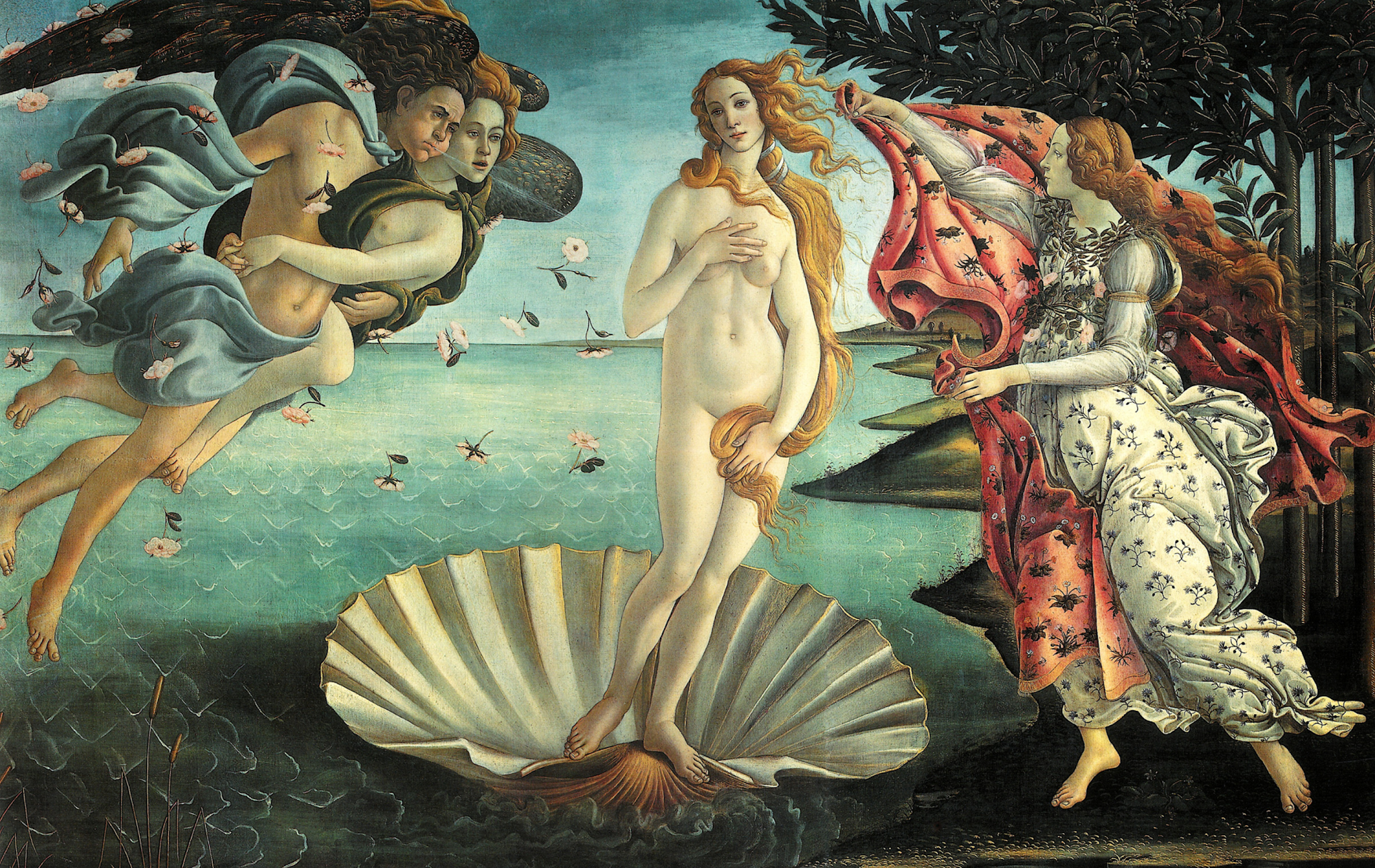
    Italian Renaissance art and architecture was a return to order and a contrast to the Gothic. It came right before the Baroque. At the end of the 1500s people declared that the dark ages were over and that they were living in a new age. Florence was a cultural and economic hotspot for Italy. The majority of Italian Renaissance art comes out of Florence. Almost all of the art was funded and commissioned by the leading family of the time, The Medici of Florence. While Florence claimed to be a democracy, the Medicis had enough power and money to rule the city. The father, Giovanni di Bocci de' Medici, was a banker and made the family wealthy. The Medici family employed Sandro Botticelli, famous Italian Renaissance painter. One of the brightest ones in his class, his talent was recognized quickly and he was removed from school. Then he was set up to become an apprentice, a practice taken for almost every young artist during the Renaissance. He apprenticed with Fra Filippo Lippi. Botticelli also worked closely with engraver Antonio del Pollaiuolo during his time painting frescoes. He opened his own workshop in 1470, when he was only about 25. His most famous work is The Birth of Venus, (below). 


    The Birth of Venus is a depiction of the story of Venus. Venus, the middle figure, was born of the sea spray and and emerged fully grown. In this painting, she arrives to land standing in a scallop shell. Then giving the impression to the audience that Venus is the pearl. The goddess is depicted as modest, covering herself with her long, blonde hair. This painting, like the majority of Florentine Renaissance work was most likely commissioned by the Medici family. 
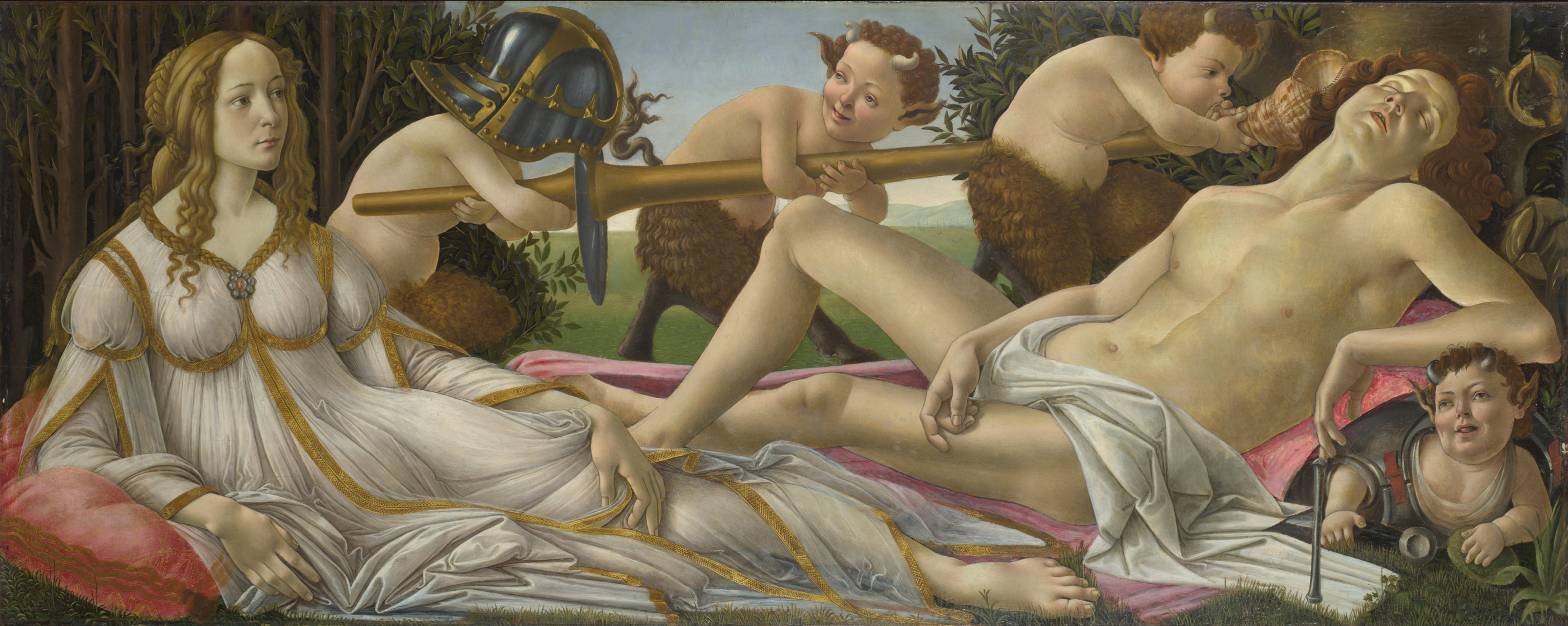

    Venus and Mars (above) is another painting by Sandro Botticelli. As is now clear, due to the two examples, Botticelli specialized in mythological subjects. On the far left of the canvas, the audience sees Venus looking regal and quite uninterested in Mars, the man to the far right. Mars is shown as sleeping and perhaps snoring. It seems as if nothing could wake him. The rest of the figures are four little boys. They are playing with his armor and seem to be making lots of noise, yet neither Venus nor Mars seems to be phased by them. 


    Leonardo da Vinci is among some of the most popular of all artists. When his name is heard, many just think of him as an artist. On the contrary, he worked in both engineering and art. Born in 1452, he was an artist, sculptor, inventor, and engineer. Some of his most famous works include The Last Supper (above), The Mona Lisa, and Lady with an Ermine. As a student, da Vinci did not apply himself in fields of mathematics or writing until much later, his 20s and 30s. Although he was not as academically inclined in his youth, his artistic talent and passion began early. He apprenticed well-known artist Andrea del Verrocchio when he was just 15. Leonardo's training in the studio was not only in painting, but sculpting, and mechanical arts. He worked here for the next five years. He was hired by the Duke of Milan in 1482 to be an engineer and painter. He was quite busy while working here. Many of da Vinci's works remain unfinished, for he was working in science and art during his Milan years. He moved back to Florence in 1500. This is where he painted The Mona Lisa. 


    Leonardo painted this portrait around 1490. The woman in the portrait is Cecilia Gallerani, Duke of Milan's mistress. It was commissioned during the time that da Vinci was working for the Duke of Milan. This work depicts Cecilia Gallerani holding a weasel. There are many interpretations of the symbolism of the animal. Some say it symbolizes her modesty, and others insist it is a joke. The word for weasel in Greek is galee. This is a poke at Gallerani's name (galee, Gallerani). 
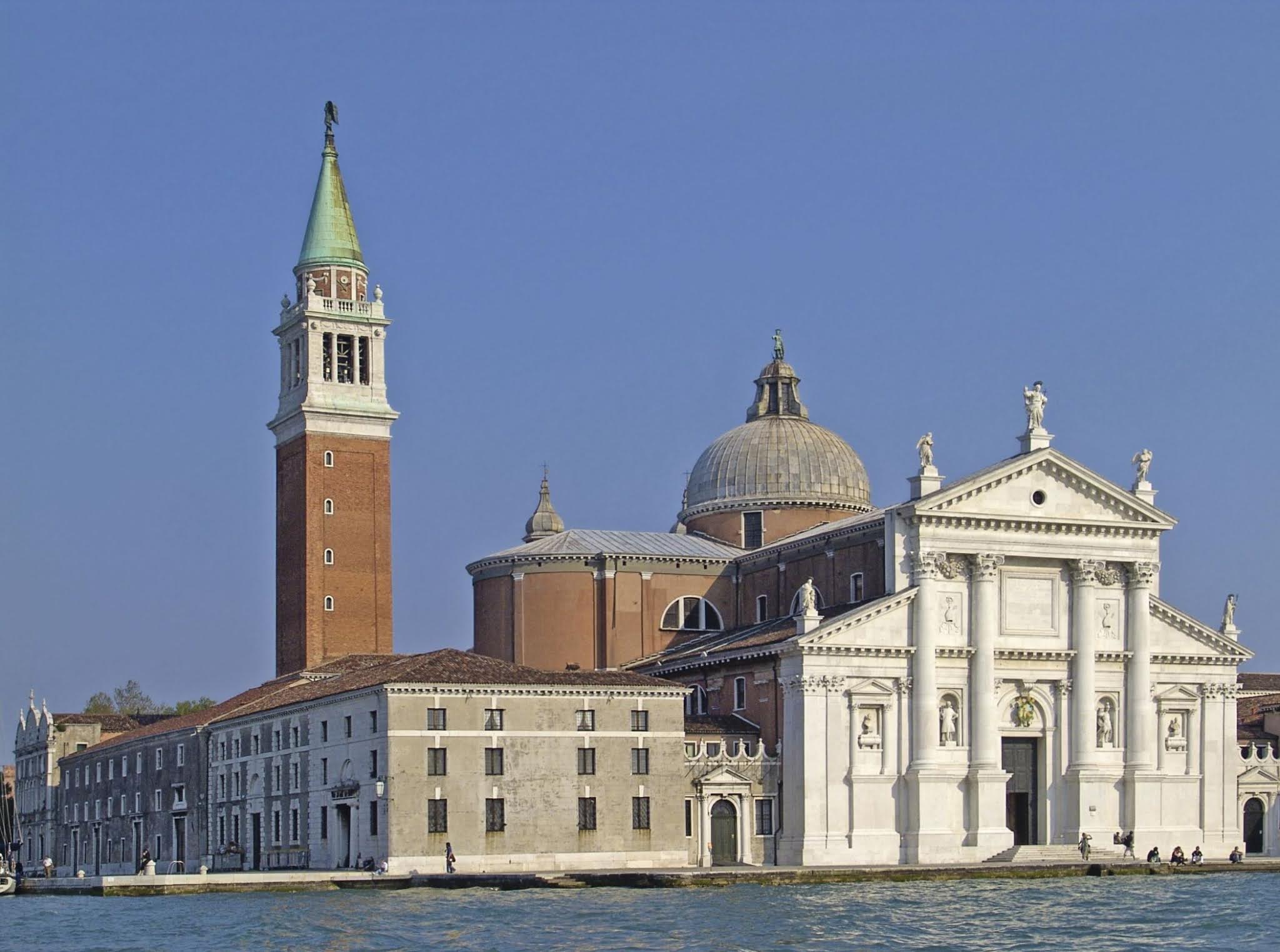


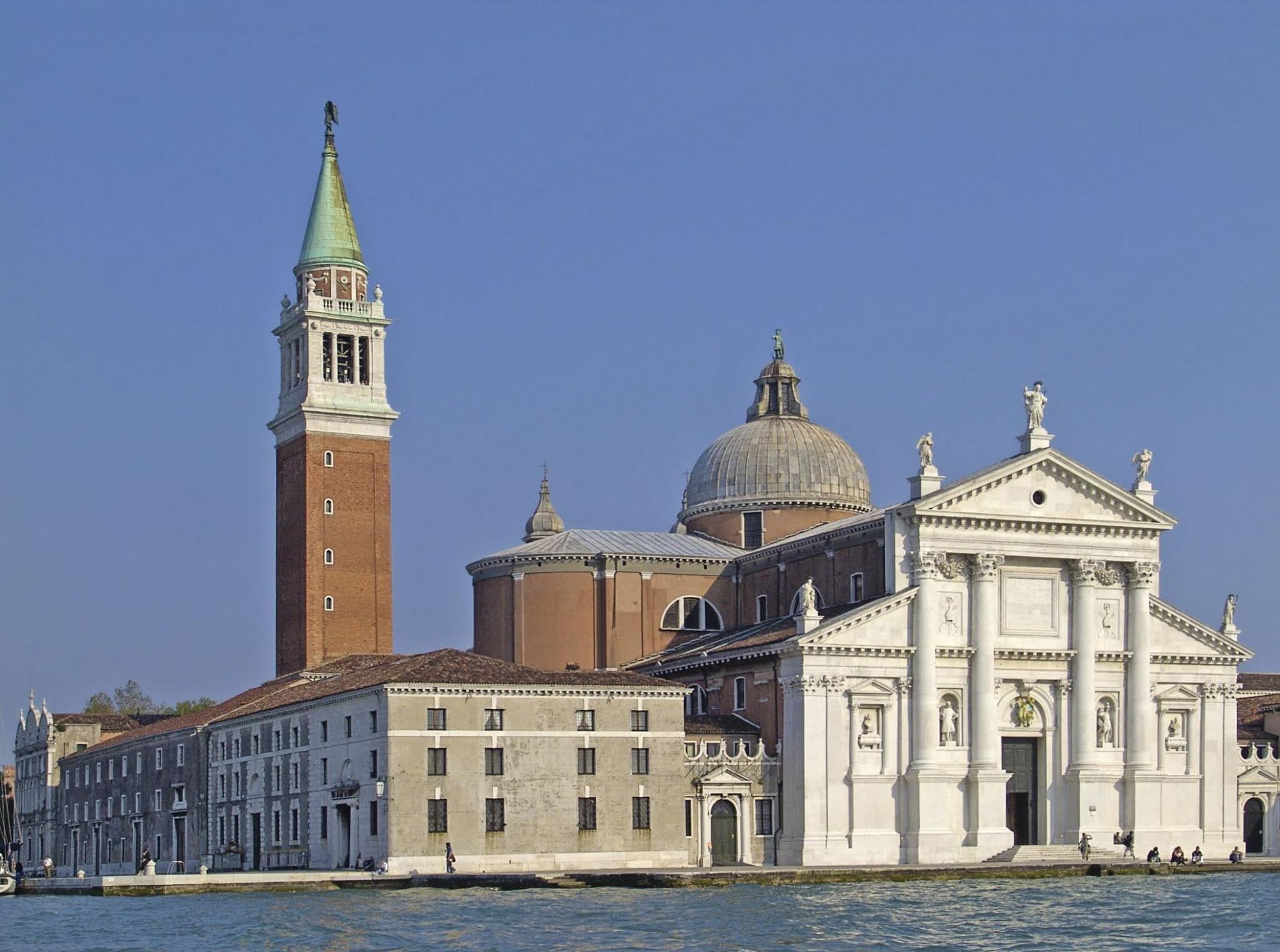
      Known as the best architect of 16th century Italy, Andrea Palladio was most famous for his Italian villas and churches. He was born in 1508. Palladio wrote The Four Books of Architecture. It was published in 1570. He was also known for his covered porches supported by columns. He apprenticed a sculptor until he was 16. Basilica di San Giorgio Maggiore (above) is his most famous church. It is visible to and welcomes incoming travelers into Italy by sea. This church has a very interesting facade, as there are two pediments. 


    This detail (above) zooms in on the church's unique facade. The two pediments are separated by the columns. The bottom one is "broken". The top pediment is intact and quite a bit smaller. The four columns are Corinthian columns. 


    Michelango, or Michelangelo di Lodovico Buonarroti Simoni, was born in 1475. He was an architect, painter, and sculptor. He was very well know during his time and still is to this day. While his architectural style was much more mannerist, his sculpture and paintings are considered very good examples of the Italian Renaissance. At 13, fairly late for the time period, he began his apprenticeship Domenico Ghirlandaio.  Lorenzo de’ Medici, part of the prominent Medici family mentioned earlier, noticed his talent and allowed him access to the Medici art collection, a huge opportunity. 

    
    Above is a sculpture by Michelangelo. The Peita is a marble statue of the mourning Virgin Mary and her son Jesus's lifeless body lying on her lap. She gazes down mournfully at his body. This sculpture is in Saint Peter's Basilica (click the word to learn more.) 

    The Creation of Adam is just one piece of Michelangelo's most famous artwork, the ceiling painting in the Sistine Chapel. The most famous snapshot being God's outreached hand just nearly missing Adam's. God is floating between the heavens and earth surrounded by angels draped in burgundy fabric. The true creation of Adam that is mentioned in Genesis of the Bible (God creating him from the dust of the earth and breathing in his nostrils the breath of life) is surprisingly never represented in Renaissance art. 


    Donato di Niccolò di Betto Bardi, born in 1386, was an Italian Renaissance sculptor. He worked in both marble and bronze. In the early 1400's, he started work in the studio of Lorenzo Ghiberti, who worked in only bronze. 

    
    David by Donatello was commissioned by the Medici family. It is a bronze statue of David after defeating the giant, Goliath. At his feet lies his head, and he is holding the sword that was used to cut off his head after he slayed him with the stones. Donatello changed the way that David was depicted. Before he was seen as a king, but Donatello depicted him as youthful.

Vocabulary:

  1. The Medici of Florence: funded and commissioned most of the art of the time; leading family of the time
  2. Venus: the Greek goddess of love and beauty
  3. Mars: the Roman god of war
  4. Apprentice: to learn from an older and more experienced artist etc. and work in their workshop
  5. Pediment: the triangular upper part of the front of a building in classical style

Works Cited
"Andrea Palladio." Britannica School, Encyclopædia Britannica, 7 Feb. 2020. school.eb.com/levels/high/article/Andrea-Palladio/276257. Accessed 31 Aug. 2020.
"The Birth of Venus by Botticelli." Le Gallerie Degli Uffizi, www.uffizi.it/en/artworks/birth-of-venus. Accessed 23 July 2020.
"The Creation of Adam." Michelangelo.org, www.michelangelo.org/the-creation-of-adam.jsp. Accessed 30 Aug. 2020.
"Donatello." Britannica School, Encyclopædia Britannica, 5 Sep. 2019. school.eb.com/levels/high/article/Donatello/30901. Accessed 30 Aug. 2020.
"Donatello's David." Italian Renaissance, www.italianrenaissance.org/donatellos-david/. Accessed 30 Aug. 2020.
"Italian Renaissance." History.com, www.history.com/topics/renaissance/italian-renaissance. Accessed 23 July 2020.
Kleiner, Fred S. Gardner's Art through the Ages: A Global History. 15th ed., Boston, Cengage Learning, 2016.
"Lady with an Ermine by Leonardo da Vinci." Totally History, totallyhistory.com/lady-with-an-ermine/. Accessed 13 Aug. 2020.
"Leonardo da Vinci." Britannica School, Encyclopædia Britannica, 2 Aug. 2018. school.eb.com/levels/high/article/Leonardo-da-Vinci/108470. Accessed 29 Jul. 2020.
Leonardo da Vinci: Last Supper. Image. Britannica School, Encyclopædia Britannica, 7 Feb. 2020. school.eb.com/levels/high/assembly/view/232045. Accessed 29 Jul. 2020.
"Michelangelo." Britannica School, Encyclopædia Britannica, 7 Nov. 2017. school.eb.com/levels/high/article/Michelangelo/108722. Accessed 28 Aug. 2020.
Michelangelo. Image. Britannica School, Encyclopædia Britannica, 7 Feb. 2020. school.eb.com/levels/high/assembly/view/159301. Accessed 28 Aug. 2020.
"Sandro Botticelli." The National Gallery UK, www.nationalgallery.org.uk/artists/sandro-botticelli. Accessed 23 July 2020.
"Sandro Botticelli: Venus and Mars in Renaissance Itlay." The National Gallery, www.nationalgallery.org.uk/paintings/sandro-botticelli-venus-and-mars. Accessed 24 July 2020.
"San Giorgio Maggiore." Britannica School, Encyclopædia Britannica, 8 Apr. 2011. school.eb.com/levels/high/article/San-Giorgio-Maggiore/65312. Accessed 14 Aug. 2020.


Like this post? Check out the post on Italian Baroque

© Art History: On Display • Theme by Maira G.