AP Art History- The Series!

Wednesday, June 2, 2021

 Introducing....

AP ART HISTORY: THE SERIES!


    If you are not aware, AP Art History is course that many people take in high school. While I have not taken it yet, I do plan to within the next few years. The so-called '250' are the 250 works of art that, by the end of the course, the students need to know about (including the artist/creator, the materials, the location, the time period, etc). 

    If you are currently taking or plan to take AP Art History, GET EXCITED! This series will include guides to sections of the 250, vocabulary, and more!

What would you like to see first?? Comment down below, email to arthistory.ondisplay@gmail.com, or DM me on Instagram @arthistory.ondisplay. 

Art History Terms to Know: Rule of Thirds

Tuesday, June 1, 2021


    Used in both art analysis and art creation, the rule of thirds is a method used to keep art interesting to the audience. It states that the main subject that the eye is drawn to should not be in the middle square, were the canvas/ photograph to be split in 3x3 fashion. 

Zooming In: Frida Kahlo


    Meet Frida Kahlo!! This famous artist was a Surrealist (click to learn more)! She was also married to Diego Rivera (click to learn more). 


Guide to Art History: San Francisco

Sunday, May 30, 2021


    Traveling to California over the summer holiday? Use this as a rough itinerary or simply chose a few to visit. 


San Francisco Museum of Modern Art: 


    The San Francisco Museum of Modern Art or SFMOMA has one of the best reputations in San Francisco. Their collection of modern art is expansive, some of the most notable including Femme au chapeau by Matisse, Frieda and Diego Rivera by Frida Kahlo, a Wayne Thiebaud painting, and so many more. This is a must visit on your visit. 


De Young Museum: 


    Part of the Fine Arts Museums of San Francisco, the De Young Memorial Museum houses American art from the 17th century to present day. Not only does this museum have a diverse collection including art from Asia, the Americas, Oceania, and Africa, but it also has a wonderful observation tower from the 9th floor. 


Asian Art Museum: 


    The Asian Art Museum in San Francisco has a collection of exclusively Asian art that spans from ancient empires to today's artists. The collection of this museum is divided by floors. For example, the art of South and Southeast Asia are both on the 3rd floor. This museum is very important to visit if you are an ancient art lover!!

San Francisco has so much to offer in the art world, so please visit some (or all) of the above! :)


Comment below! Have you been? Are you going soon? Let me know!

Art Movements: Abstract Expressionism

Wednesday, May 26, 2021


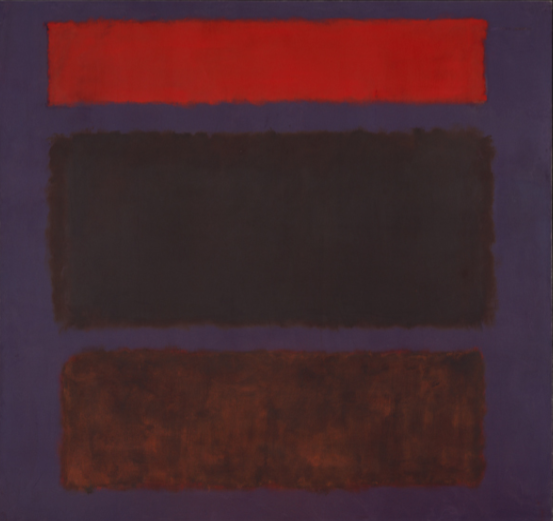
    Known as the first influential art movement worldwide to come out of America, the Abstract Expressionist Movement was born in the 1940's. The movement was lead by artists such as Mark Rothko, Jackson Pollock, Joan Mitchell, Willem de Kooning, and so many more. 


    The Abstract Expressionist movement did not start out smoothly due to the group of artists' varying opinions of what the movement should become. For example, many of the artists did not like the idea of being associated with a larger group, because of their varying ideas. Despite their worries and resistance of being confined to in -ism, history has proved itself, and the art world now knows this group as the Abstract Expressionists. The beginning of the movement was largely influenced by the stock market crash of 1929. This event itself did not start the movement but rather its effects such as the Great Depression, WWI, and WWII. These major events in America created an impetus for change in the art world with so many emotions to express and document. 

      Mark Rothko (click on the post already done about him) started out his career away from Abstract Expressionism, taking lots of inspiration from Surrealism (click to learn more), but as he got older and more experienced his style grew more and more contemporary. His family immigrated from Russia in 1913, and he began Yale in 1914. Although he dropped out of college, he began traveling around the USA for inspiration. Rothko's art (as seen above) is instantly recognizable to many viewers, due to his large blocks of color. This artist was of the belief that, “I’m interested only in expressing basic human emotions-- tragedy, ecstasy, doom. If you … are moved only by … color relationships, then you miss the point.”  


    Joan Mitchell (click to view the post already done) was one of the only women accepted into the Abstract Expressionist movement. Mitchell used art as a tool of self-expression, as many other Abstract Expressionist did, but rather in a different way. Mitchell used her art as an outlet during difficult times such as her mother's death. She was particularly interested in conveying nature scenes. She said she does not paint a nature scene exactly, but “what it leaves me with.” 


    Willem de Kooning was an artist that was highly influenced by many different styles and artists, including Cubism, saying," Of all movements, I like Cubism the most." He also was a big leader in the Abstract Expressionist movement. 

    The Abstract Expressionists believed in expressing emotion through non-figurative art. 


Hess, Barbara, et al. Abstract Expressionism. Revised [edition]. ed., Köln, Taschen, 2016. 
Kleiner, Fred S., and Helen Gardner. Gardner's Art through the Ages: A Global History. Fifteenth edition ed., Boston, Cengage Learning, 2016.
"Mark Rothko." Britannica School, Encyclopædia Britannica, 2 Sep. 2010. school.eb.com/levels/high/article/Mark-Rothko/64191. Accessed 23 Jun. 2020.
MoMa Highlights: 350 Works from the Museum of Modern Art, New York. 3rd ed., New York, Museum of Modern Art, 2013.
No. 6 - Violet, Green and Red. Fine Art. Britannica ImageQuest, Encyclopædia Britannica, 25 May 2016.quest.eb.com/search/107_3355794/1/107_3355794/cite. Accessed 23 Jun 2020.
"Orange and Yellow." Image. Britannica School, Encyclopædia Britannica, 8 Feb. 2020. school.eb.com/levels/high/assembly/view/156960. Accessed 23 Jun. 2020.
Twemlow, Maleficent. "A Painting as an Experience." MOMA, 18 Mar. 2013, www.metmuseum.org/blogs/teen-blog/modern-and-contemporary/posts/rothko. Accessed 23 June 2020.


Do you like this movement? Comment below!!


© Art History: On Display • Theme by Maira G.